



The trouble with Zappos: The company is over-exposed as an example of social media excellence. This causes skeptics to believe that success is difficult because only one company has achieved it.
The trouble with Zappos: Hundreds of "social media experts" cite the company in their books, blogs, speeches, Webinars and the like. As a result, the marketing discipline is not moved forward because we don't learn about other companies and their success.
Zappos. Again?
I've been at conferences when multiple speakers prattle on about Zappos and witnessed many people completely tuning out and even leaving the hall.
I've been in meetings with senior people when Zappos is cited and watched the executives roll their eyes and start playing Blackberry.
They've heard it already.
Don't get me wrong. I'm not criticizing Zappos.
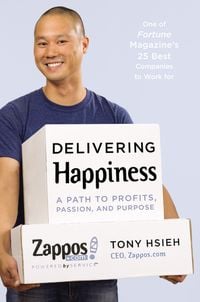
Zappos has done some amazing things. If you want to learn about the company, read CEO Tony Hsieh’s book Delivering Happiness: A Path to Profits, Passion, and Purpose. It's worth the read.
My issue is not with the company but with those who incessantly use this one example as "proof" new marketing works.
I've got news for you: Your CEO will not draw 1.75 million followers on Twitter like Tony Hsieh.
I've got news for you: Your brilliance in social media will not be cited 5.8 million times on the Web like Zappos.
Who should you look to as an example?
If your young daughter wants to be a singer, you can use Lady Gaga as an example of success. Sure, your daughter could get a major record deal, wear meat products on the red carpet, and be talked up in the tabloids. But isn't there a more appropriate example of success for your daughter look up to? Like that great folk singer at the coffeeshop in town?
You know what pisses me off?
Students in communications and MBA programs tell me that they still teach the Tylenol case of 1982 as an example of crisis communications success. How ridiculous! A crisis unfolds much faster today because of real-time media. The 1982 playbook used in 2010 will lead to disaster.
Nearly three decades ago a huge company, Johnson & Johnson, spent hundreds of millions to solve a crisis that mainly played out on three network television stations. What can you draw from that to use today? You'll learn as much about communications studying Mark Twain.
Business school professors still teaching Tylenol are too lazy to find examples from the real-time world of today. If you're a student, call out your boring old professor if he talks up Tylenol for the 28th year in a row. (You might also ask him if he still listens to Bachman Turner Overdrive on his 8-Track.)
The same is true of those who keep talking up Zappos.
Go ahead and study Zappos.
But when you’re done, here are some other examples of new marketing success to consider:
Larger B2B companies: IBM and Amdocs and Cisco
Smaller B2B company: Attivio
Large B2C service provider: H&R Block
Rock bands: Radiohead and the Grateful Dead and Amanda Palmer
FMCG: Charmin
Hotels: Wynn Resorts
Nonprofits: Girls Fight Back and Headcount and Clinton Bush Haiti Fund
Job search: Monster
Airlines: Air New Zealand
Airplane manufacturer: Boeing
Automakers: Mazda Australia
Movie producers: Ryan Gielan's Dorm
Government agencies: Massachusetts Water Resources Authority and US DoD and Her Majesties Government (UK)
Farm equipment: John Deere
Shopping malls: Federation Square in Melbourne
These are just a few examples from my blog since April 2010. You can check my blog's case study archive for a few hundred other examples over five years.
Say no to Zappos
If you're learning about new marketing and are sick of hearing about Zappos as an example, please push back on the "experts" and ask for another company and why they succeeded.
If you're an "expert" don't undermine your authority by going over this worn trail yet again. It's all been said better by Tony himself. Instead, as you write your blog and book, or shoot video, or take the stage, be bold. Tell us something we don't already know.


WOW I was just asking myself yesterday what other companies have done it the Zappos way because no one can completely duplicate their process because no other company can offer the same service with as much success. Thanks for the many examples.
Posted by: Kt0wn | December 02, 2010 at 01:40 PM
Excellent post. You're right, there are MANY companies out there experiencing success with social media. And they're NOT all doing exactly the same thing either. There is MUCH to learn in this field, if only we're looking in the right places.
Posted by: JenFongSpeaks | December 02, 2010 at 01:47 PM
Found this post on Twitter. :)
You made some good points (I'm guilty of talking about Zappos, myself). I also enjoyed the links to the alternative sites that have experienced marketing success.
Posted by: Pat | December 02, 2010 at 01:58 PM
David:
Great take on this topic...It's been a while since my college days, but I remember the Tylenol crisis being used as a case study for crisis management in my PR class. And I've interviewed at companies recently that stated they wanted to have customer service like Zappos. That's all fine and dandy, but there's so much more out there and I'm glad you shared some examples. Great job.
Posted by: Tim | December 02, 2010 at 01:59 PM
Thanks for a great post, David. "Go where there is no path and leave a trail" is, I think, the right quote for those who struggle to understand why this should be seriously noted. Be bold, and make something new happen. The sense of achievement if you actually do this is fabulous.
Posted by: Ian | December 02, 2010 at 02:04 PM
Thanks to all of you for jumping in. I was a tiny bit nervous pushing the button on this post. Glad to see that so many others had the same idea.
Ian - I guess I am dong what you say with this post too.
Posted by: David Meerman Scott | December 02, 2010 at 02:26 PM
LOL and I am wondering "what the heck is Zappos?"
David - I have had such a great education about real-time marketing at this blog. It really is about being in the flow of the moment and acting NOW not tomorrow or 3 weeks from now. I remember the Tylenol crisis and being very moved as a consumer by their response as a commpany that cares. But if the same thing happened today I think you are quite right - I would expect instant communication on Twitter/ facebook etc. to get that feel good confidence back.
Posted by: Carolyn Winter | December 02, 2010 at 02:40 PM
I've been making the same mistake with Blendtec and their YouTube videos.
Posted by: Matt Ambrose | December 02, 2010 at 02:57 PM
They can't be that good... nobody has heard of them in the UK.
Posted by: some guy | December 02, 2010 at 03:27 PM
The underlying problem here is not having enough personal experience to draw from so people fall back on easy to find examples on the web. When I present on social media I try my best to bring in examples that I actually had a part in. What does it matter to my credibility that Zappos is successful? I had nothing to do with it. I admire it, I understand it sure, but I didn't influence it. I like to talk about the clients I've worked with and the success they've had and the things I did to cause it. They might not always be extremely well-known (might be the local folk singer to your Lady Gaga example) but I find it's easy enough to set the stage with a quick background, explain the problem, explain what we did and what the results were (positive and negative and how we adjusted.) And that tells my audience a lot more about the way I think and gives them a lot more insight into how be successful than always trotting out the big names. I find matching the example to the audience is key, if you talk to a big brand about a local restaurant they'll tune out and if you tell a small business about a global brand name they'll feel frustrated. When I don't have a fitting case study in my own background I try to find something new and fresh I can illustrate as an example of my idea rather than just repeating a case study that's been done previously because the point is showing your own thought process, not someone else's. Just my $0.02 - but thanks for the post and the kick in the butt to all of us to get more creative!
Posted by: Katie Van Domelen | December 02, 2010 at 04:11 PM
Exactly. I think the same audiences are getting tired of the social media guy/gal with the "Twitter will save your business" mantra, wearing the tshirt and tennis shoes as well. My opinion of course.
Posted by: Jim Kukral | December 02, 2010 at 04:43 PM
Your citing of the Tylenol case never ceases to amaze me too
But the one element that is really remarkable in that case study is the element of TIME - they had HUGE amounts of time in their well crafted responses.
Quite the opposite of Real Time Marketing!
Posted by: Paul Dunay | December 02, 2010 at 04:47 PM
Bravo Katie! Keep up the great work.
That's exactly right Carolyn & Paul. J&J communicated via the nightly news on three networks.Great at the time, but the strategy would #fail today.
Jim - "Marketing is a conversation" is another mantra that needs to be considered before repeated.
Matt - there are others. Comcast pops up a lot too.
Posted by: David Meerman Scott | December 02, 2010 at 05:36 PM
I was pleased to hear someone talking after receiving an award for their social media marketing efforts saying "but we still don't get Twitter". Made me feel a little less inadequate.
Posted by: David Laurence | December 03, 2010 at 04:53 AM
Yes, David. A great example of it in action!
Posted by: Ian | December 03, 2010 at 05:19 AM
David - Honesty in action! One of the hallmarks of being social.
Posted by: David Meerman Scott | December 03, 2010 at 06:41 AM
Thanks for pointing out that you don't have to be Tony Hsieh to have success in SM and marketing. BTW - two members of my team attended your presentation last week and came back energized and impressed. Sorry I could not be there myself. http://blog.cgsm.com
Posted by: Markkolier | December 03, 2010 at 08:05 AM
This is great. A lot of my new clients that are excited are too eager to just grow follower and fan numbers.
They don't realize they don't need to compete on follower numbers of the big boys.
It's always a learning process to get them to understand the value of the relationship quality versus follower count.
Posted by: Matt | December 03, 2010 at 10:58 AM
Ha. I was actually the first person to talk about Zappos - on stage and then in my book before anyone had heard of them. In fact, Tony credits myself and Thor Muller for getting him onto twitter. (Thor is who told me I should use Zappos as an example in 2007 for a case study on creating amazing customer experiences)
The truth is, though...of the case studies you've listed, none have come close to the success of Zappos. None. Zappos doesn't look at SM as a campaign. It is just part of their very amazing culture that existed BEFORE SM. That's the key. There are very few companies that have that sort of culture. Apple and Google, for instance...they don't really even use social media, but have the same level of love.
Posted by: Tara 'missrogue' Hunt | December 03, 2010 at 12:08 PM
Tara -- Congratulations! I'm so glad I know who "broke" the story.
I'm not suggesting that my other examples are of equivalent success.
Rather, I'm saying that Zappos is WAY overexposed and is old news to almost everyone. Therefore the people that continue to talk it up are frequently wasting people's time and making themselves look ignorant. Much like those who talk up Tylenol as a crisis example 30 years later.
You, however, can talk up Zappos any time you want to!!
Posted by: David Meerman Scott | December 03, 2010 at 12:26 PM
I fear that most social media experts would throw chairs at me if I suggested they use an example other than Zappos.
They tend to dislike learning new stuff. Heehee.
Posted by: Pugofwar | December 03, 2010 at 12:42 PM
Bravo, David!
So many outstanding companies to highlight -- as you've shown. The Zappos example is completely trite and useless for companies with different business models and/or audiences.
Posted by: Robertgorell | December 03, 2010 at 12:55 PM
congratulation! I thought it was some one else. !
Posted by: Magento Themes | December 03, 2010 at 01:52 PM
I wrote a couple Zappos inspired blogs after hearing Tony speak and reading his book. Since then I signed on as a Very Happy Person (VHP)to dialogue with others about the mission of their Delivery Happiness Tour to inspire and be inspired by others. Only have good things to say about my time with the Zappos gang and the corporate culture lessons available through their work.
That being said... I 100% support your main point that as thought leaders (and college profs) we need to keep it fresh. Big Kudos to you for not just putting out the call not to get lazy -- but to lead by example in a big way by listing several exemplar companies who are doing things right. This is my first visit to your blog...I'll be back ;)
Posted by: DrMollieMarti | December 03, 2010 at 02:29 PM
Great post, David. Great list of social networking successes.
On Tylenol, in my career I've met no less than 20 crisis experts who claim to have been the decision makers and/or counselors on that situation. Enough already! Completely agree. (That said, I will concede that it's tough to find good crisis management case histories. Because when those cases are well handled, they end quietly and without fanfare.)
Posted by: Jamesjdonnelly | December 03, 2010 at 02:33 PM
DrMollieMarti - I think that if you read Tony's book and heard him speak then you can certainly add to the discussion by giving your thoughts based on what Tony says. It's a review of his book & speech with your thoughts which is different than just using Zappos as an example of success.
In other words, I'm fine with people reviewing the Harry Potter books and films but sick of the rags to riches story of JK Rowling as "proof" that you can be a successful author too.
Jamesjdonnelly - Funny - I'd never thought about the idea of people taking credit for the Tylenol thing...
There are some great crisis communications examples from the modern 24x7 world out there. Here's just one. http://bit.ly/a7tHTi
Posted by: David Meerman Scott | December 03, 2010 at 03:26 PM
One other consequence of talking up a single example:
The company can never live up to the hype.
Our expectations of Zappos are now so high that they will never be able to live up to them. Case in point: If you order gift cards from Zappos, they ship via UPS/Signature Required. Regardless of amount. So someone has to be home to sign for them, or they get redelivered 3x and then sent back, or you need to go pick them up at the UPS depot.
So...let's find a wide range of examples that a wide range of individuals and organizations can relate to. Takes the pressure off us to be just like The One of the Moment, and takes the pressure off The One to be perfect.
Posted by: Barbara Bellissimo | December 03, 2010 at 03:40 PM
Great point Barbara! Same is true of other companies like Apple.
Posted by: David Meerman Scott | December 03, 2010 at 03:49 PM
Interestingly leading a workshop here in Ireland yesterday, one of the delegates was mentioned Zappos in the context of customer service.
I agree with your thoughts in terms of needing to reference new case studies. 'Dell Hell' would be another example that comes to mind!
I also think they need to be case studies that are in an 'arms reach' of people so that they can say 'well I could do that' to inspire them to take action.
I do however find that outside of the US perhaps some of these case studies are still not as well known and can be used to inspire - however it depends on the audience that you are speaking with.
Thanks David for the reminder of the previous case studies you have written about and the research you put into each of your own books to share with us new case studies.
Posted by: KrishnaDe | December 04, 2010 at 05:21 AM
I take it you are talking about Brian Tracy's latest book?
One of the examples I HATE hearing about it Fed Ex delivering the bride's dress through the snow or Fed-ex chartering a helicopter to get the package on time to a client. These are all ridiculous examples because FedEx does not give a crap whether the packages arrive on time from my experience!
Posted by: Wallisphoto | December 04, 2010 at 11:47 PM
Krishna - Yes, the Zappos example may not be as overexposed outside the US.
Wallisphoto - NO!! I am NOT talking about anyone in particular. There are literally thousands and thousands or so called experts talking up Zappos. And yes, those FedEx examples pop up a lot too.
Posted by: David Meerman Scott | December 05, 2010 at 03:15 AM
Thanks, David, for all these great suggestions.
Best,
CB
Posted by: C.B. Whittemore | December 05, 2010 at 06:58 PM
Tylenol is not still taught as an example of crisis communication. My example of crisis communication was the BP oil spill. We analyzed techniques to respond to a massive crisis like that.
Posted by: Mneiae | December 06, 2010 at 08:50 PM
I'm not tired of Zappos just yet. There are so many things to learn from them. But I understand what you're saying.
When it comes to Twitter, I'm looking at what AJ Bombers are doing. They're doing everything right, but they're a small company.
Thanks a lot for the list of other companies to follow.
Posted by: Jens P. berget | December 07, 2010 at 11:55 AM
David,
Love me my Zappos as well but hear ya on keeping it relevant and fresh. Thanks for the B2C shout-out!
Zena Weist
H&R Block
Social Media Director
Posted by: Zenaweist | December 08, 2010 at 04:12 PM
Just a few months into a new job in Dec 2004, an otherwise amazing flow of a Corporate Communications new-hire orientation came to a crash when the trainer presented the Tylenol case. (at the time, the company's motto was "innovation that matters," with "innovation" being defined as "22-year old case studies."
What was more insane is that the trainer split us up into five groups, then asked each group, "in the same situation that Tylenol faced, what would you do?"
Guess what every group decided? so, by the time she got to my group, #5, I figured I'd add some variety, and replied, "we raised the integrity-bar a bit, and instead of asking 'what would you do?' we asked 'what would Jesus do?"
Turned out to be the first of many times I would hear the term "fire-able offense."
Posted by: Timwasher | December 08, 2010 at 04:30 PM
Jens - I'll check out AJ Bombers. I always like new examples.
Zena - Keep up the great work.
Tim - Yikes. I bet that trainer is still teaching Tylenol. Ask them if they drive a Yugo.
Posted by: David Meerman Scott | December 08, 2010 at 04:40 PM
really great post. now how do I market my blog :)
Posted by: Damaris @Kitchen Corners | December 08, 2010 at 05:35 PM
David: For crisis management in PR, yes, I still teach the 1982 Tylenol Case, along with many contemporary cases, some as they happen (like Amazon's pedophile book case from three weeks ago). We also watch video clips of Edward Bernays talking about manipulating the masses and then a clip of David Meerman Scott talking about not being afraid to lose control of your message. In this way, students become more aware of the evolution of the field and, in doing so, become more engaged critical thinkers. If we want to educate students beyond what tool to use, and develop critical thinkers who can strategize by gaining an understanding of the evolving culture, political and economic climates, then the past continues to be relevant. (PS I also have them watch Illinois Power vs. 60 Minutes...now that's vintage!)
Posted by: Jean Kelso Sandlin | December 08, 2010 at 06:11 PM
Jean -- I really appreciate you jumping in regarding the Tylenol case.
I hadn't really thought about it from the perspective of understanding how the discipline has evolved over time. Thanks for opening my eyes to that aspect - I appreciate it.
And thanks for using one of my clips! I'm honored.
David
Posted by: David Meerman Scott | December 10, 2010 at 10:22 AM
It's a great book and very splendid source for entrepreneurs. Thanks for sharing it.
Posted by: Hamid | December 11, 2010 at 03:57 AM
The point is not that Zappos or Tylenol are *representative* case studies; rather, that knowledge of these is *necessary but not sufficient* to demonstrate expertise.
That is, if you claim to be a crisis PR expert but have never heard of the 1982 Tylenol recall case, you are probably not a actually a crisis PR expert. And if you claim to be a social media expert but know nothing about Zappos, you are probably not actually a social media expert.
I wrote about the phenomenon of genuine expertise in my blog last year:
http://www.robbyslaughter.com/blog/?2009-01-05
Posted by: Robbyslaughter | December 13, 2010 at 10:17 AM
David,
Bold post!
I too blogged about Zappos in my post http://tinyurl.com/36gocvv .
I enjoyed the book and found it offered what many leaders are looking for : Proof.
You share a number of other great examples I will also use to illustrate how the “golden rule” consistently out produces other models.
Mark Allen Roberts
Posted by: mark allen roberts | December 14, 2010 at 01:23 PM
Robby - I agree that everyone should be aware of these examples. But that doesn't mean that all "experts" need to teach it.
Mark - Gotta be bold now and then!
Posted by: David Meerman Scott | December 14, 2010 at 01:56 PM
I am involved in a Twitter chat under the hashtag #custserv on Tuesday evenings, 8-9 CST. We have a game reminiscent of the Hi Bob drinking game. Anytime Zappos is cited everyone takes a "drink". Unknown if drinks are actually consumed by anyone in the group since it is Twitter, not Skype.
Posted by: Jody Pellerin | December 20, 2010 at 10:05 PM