




Case Studies | Real-Time Marketing & PR | Best Practices
UPDATE May 5, 2010 -- Less than two hours after I published this blog post, Boston Globe Reporter Don Aucoin found it and contacted me for comment on a story he was in the process of researching and writing about the communications aspect of this emergency. That article Long-honed alert system passes its test run ran on the front page of today's paper and online and included a quote from me.
++++++++++++
 On Sunday morning, I was enjoying a cool glass of tap water while relaxing at home with my family. The phone rang. As I did not recognize what popped up on my caller ID, I let it go to voicemail.
The message was from my local community’s "reverse 911" communications system that alerts everyone in town when there is an emergency. The message detailed a water main break in the area that had occurred several hours before. This was the first I had heard of the situation.
I jumped online to learn more. At that point the news was incomplete. But over the next few hours, newspaper Web sites started to report the story and TV stations began to show video of the massive leak.
It turned out that when the Massachusetts Water Resources Authority switched to a backup system to retain water pressure, the water was unsafe to drink, requiring a massive communications effort to millions of people.
The next day, I received a second reverse 911 call, updating the situation. I've captured the reverse 911 calls here.
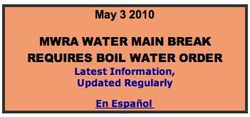 I am stunned at how well the situation was handled by local authorities, the City of Boston, the State of Massachusetts and the Massachusetts Water Resources Authority.
Throughout the weekend, day and night, Fred Laskey, executive director of the Massachusetts Water Resources Authority was all over the news providing updates. His information was detailed and he was always cautious about saying when things might return to normal.
The MWRA created a special site that pointed to detailed information available in English, Spanish, and Portuguese.
I was talking to my friend David Henderson this morning about this. David is an Emmy award winning former CBS television newsman who is now a brand journalist. To us, it was clear that a comprehensive real-time crisis plan was in place at MWRA and the state and local authorities for them to have communicated so well.
In many ways the way this crisis was handled by state and local governments was superior to that of many companies faced with crisis in 2010 (Toyota and BP come to mind).
Does your company have a real-time crisis plan in place?
