

On the global speaking circuit, I frequently get pushback from audience members who work in highly regulated industries. They claim, erroneously, that laws like HIPAA and regulations like those from the SEC and the FDA forbid them from creating valuable content on the Web or engaging in social media.
Nonsense!
This is just a fear-based excuse perpetuated by lawyers in the pharmaceutical, healthcare, and financial services industries who want to avoid risk at all cost.
Ignoring the data
The fear is particularly shortsighted when considering the data on how people make decisions related to their health. Last week I delivered a talk at the National Healthcare Marketing Summit and had an opportunity to meet many marketers who are happily reaching their audiences with valuable information because they live in reality not fear.
According to data presented at the conference by Tim McGuire from Greenville Hospital System, Bill Moschella of eVariant, and Anne Theis of Salem Health, 80% of Internet users look up health information online.
More than three out of four people use the Web to make healthcare decisions!
Yet 64% of hospital marketing departments devote less than 25% of their marketing budget to interactive. Even more telling is how hospital marketers spend their time. 83% of hospitals devote less than 30% of staff time to interactive media.
This is ridiculous.
The fearful lawyers say “no” to the 80% of customers and potential customers who use the Web to research health? Fear means that hospital marketers are busy making brochures and TV ads instead of creating Web content?
Can your organization afford such a disconnect?!
Learning from Chris Boyer and Inova Health System
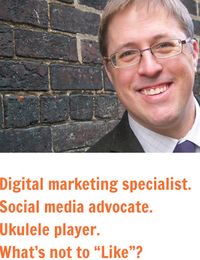
For example, Chris Boyer, Director, Digital Communications and Marketing, Inova Health System is doing a terrific job. Inova is Northern Virginia's leading not-for-profit healthcare provider, serving more than 1 million people each year.
Under Chris' leadership, Inova is active on social sites like Facebook, Twitter, YouTube, Google+ and Pinterest (and more). You can see all the social platforms on this page, which also has information on Inova's social media policies. In addition, Chris has a personal blog (as do others in the organization).
But it the content that Inova publishes to reach specific buyer personas that interests me the most. For example, there is a Life with Cancer site that contains valuable information for patients and their families.
In a world where others are fearful of creating content, Inova publishes videos like this one. Phil Gilbert's Story - Relief After Hip Replacement.
Content for Inova’s buyer personas
In the last two years, Chris has transformed the Inova organization to be more focused on creating relevant content. I asked a bunch of questions so that we can all learn from his efforts.
"We take a lot of time understanding who our viewers are and actually write different types of content for different types of users," Chris told me. "Patients are using our patient and visitor information so they're looking for specifics about how to make their stay easier and we write with them in mind. Other people view our services and all the different clinical stuff that we provide at Inova. They could either be referring physicians who want to research what we're doing here or there could be consumers who are actually shopping for healthcare and we want to provide them content that's appropriate for them. It is written so that they don't have read through pages and pages of clinical content to get to the crux of what they're looking for."
Hire journalists
Chris manages the digital marketing and communications team, including a handful of editors and web graphics professionals as well as several part-timers.
A full time social medial manager on the team focuses on social media channels, although there's a lot of content interaction and cross-publication efforts because the lines between social media and the website are blurring tremendously at Inova.
Long-time readers of this blog know that I frequently talk about hiring journalists to create content. Professional reporters and editors, more than marketers and PR people, are the best staffers for content sites because they understand how to tell a story and don't fall back on product pitching. That's exactly what Inova has done.
"The two main editors for our website are actually former journalists," Chris says. "So they have experience in terms of writing; of course, they started in traditional media. But in the last few years, they migrated over to focus exclusively on online journalism and communications."
Manage fear
I wanted to know how Chris has dealt with the whole "fear" thing. Why has he been successful in hiring journalists and creating content when so many other management teams and legal departments simply say: "no".
"Healthcare organizations typically are very conservative in how they market or communicate about their services," he says. The main concern of management was that a shift to content marketing would mean a shift away from what they thought were the key differentiators of Inova Health System in the market that attract the best physicians. "It took a long time for us to educate that the existing content is not being lost, we're just providing it to each audience in the appropriate places. There will be pages for consumers, pages for physicians that are looking to refer or be employed here. It took a while for them to be comfortable with that."
Measure success
What about the whole ROI thing? With a team of people, there are significant resources devoted to this effort. Is it paying off?
"We use tools like Vocus to measure effectiveness," Chris says. "But I also manage, as part of my larger responsibilities, our CRM team and our customer relationship management database. So I've been creating a social media strategy that is aligned with our customer relationship management database so I can actually measure downstream utilization and ROI of our social media activity."
Chris is a bit of a social media ROI rockstar and was even filmed at a Mayo Clinic conference singing his Social Media ROI Rag.
Chris has three specific areas that he measures:
- New patients. How many people become patients who first connected online either through content on the Website or social networks such as Facebook and Twitter.
- How much money can be saved by using online tools. For example the existing Inova nursing communications is a printed newsletter that goes out to all nursing staff and it costs $80,000 a year to produce. So converting over to a blog they means eliminating that expense while increasing readership.
- Long-term patient engagement and wellness. Chris measures patients (or potential patients) who get involved wellness programs. For example, Inova has email communications focused on how to have a healthy heart, how to eat well, and the like. He’s looking for people who stay healthy because of the information they consume and how that effects things like re-admittance rates.
Advice to the fearful
With all of his success, I wanted Chris to provide suggestions to people in other regulated businesses.
"Realize that you don't have to transform your entire organization all at once," he says. "I found a lot of success in focusing on areas where there are some obvious opportunities and used social communications in those areas. Try something and see how it's working. You're gaining valuable expertise and understanding about how to use the tools. Eventually in most organizations once you introduce social communications to your portfolio, very quickly you'll start to see how it will start to augment, if not replace, some of the current ways that you're communicating."
No excuses
As Chris shows, content marketing is alive and well in highly regulated industries.
Isn't it time for your organization to eliminate fear?


David, Inova's posting of ER wait times on its website is perhaps the coolest thing I've seen in healthcare in a year.
Posted by: Nalts | May 08, 2012 at 02:47 PM
Nalts -- And I was too thick brained to even notice that. THANKS for pointing that out.
Posted by: David Meerman Scott | May 08, 2012 at 02:54 PM
Bravo!
I've wanted to write something like this for years
well done, David
Posted by: Seth Godin | May 08, 2012 at 03:08 PM
Thanks for highlighting Healthcare, David.
I've been consulting in the healthcare world on and off for a few years and just took a leap last year to join a health system full-time in much the same position as Chris.
The "fear" I've found is less about content/HIPPA and more about the fear of flipping the budget over and putting more resources into online/digital/content/inbound, etc.
Data helps us make the case for that. And it's working here.
But, the corporate wheel turns slow...and it can wear you down.
That's why I really think the best take-away here is Chris' advice to not try and change the entire organization at once and to look for "obvious opportunities..."
Good stuff all around :)
Posted by: Dave | May 08, 2012 at 03:11 PM
Absolutely right David. Many of our clients work with registered and managed financial products meaning that all thought leadership has to pass through a narrow filter of acceptability with FINRA and the SEC. Sure it's always hard work blazing a trail, but now that success has breed understanding through legal, compliance and marketing departments at these clients, what was previously avoided out of fear, is now embraced as a competitive advantage. If it was easy, everyone would be doing it.
Posted by: @camilla411 | May 08, 2012 at 03:17 PM
Thank you Seth. I appreciate it.
Dave - Chris is a real pioneer in this area. If you haven't already, you should check out his blog. At the end of the post, Chris talks about taking it slowly which I think is excellent advice.
Camilla - Yes indeed. Although this post was about healthcare, it certainly applies to what you are doing in financial services.
Posted by: David Meerman Scott | May 08, 2012 at 03:38 PM
I was just discussing this a few weeks ago and making the case that, yes, it may be more of a challenge, but the rewards of humanizing a brand in a highly regulated industry can be many! Thanks for tackling this issue, I'm sharing now.
Posted by: Lynne | May 08, 2012 at 03:40 PM
Lynne - That's exactly right. And an added benefit is that your competitors are not engaging with their market so you really stand out.
Posted by: David Meerman Scott | May 08, 2012 at 03:43 PM
Great article,
What's you experience or exposure been in the other side (pharma) category clients? I've been working to get a client to move beyond their legal fears of publishing compelling content both in and out of their owned properties, but to no avail?
Suggestions on best in class for Pharma? Both in content creation and social broadcast?
Posted by: Andy Brownell | May 08, 2012 at 04:04 PM
It's cool that you actually have someone who's done/doing it as an example rather than just the theory. I have a regulatory background from my work with financial institutions and sometimes they can be the hardest to work with since you're constantly fighting the fact that better is the enemy of "good enough".
Posted by: SocialMatica | May 08, 2012 at 04:45 PM
David - thanks for the kind words and all the great feedback in the comment section. I couldn't have done this all without my team: they all are fearless and we encourage each other to champion new tools and ways to communicate. Here are the five silver bullets I share with other hospital marketers, when they ask how they could start their "real-time" communication strategies:
1. Start small
2. Don't be afraid to fail
3. Celebrate your successes
4. Measure, measure, measure
5. Remember, there are no such things as "silver bullets"
Thanks again!
Posted by: twitter.com/chrisboyer | May 08, 2012 at 05:16 PM
Andy - in my experience, Pharma is even more fearful than healthcare.
SocialMatica - Yes. I try to use examples in my posts and Chris is an excellent one.
Chris!! You're a superstar. Thanks for the additional helpful pointers. And keep up the great work. Tell your boss that you need a raise.
Posted by: David Meerman Scott | May 08, 2012 at 05:34 PM
David
As a former lawyer (I spent 14 years in practice), I come up against a whole slew of reasons why social media can't be done. Lawyers are great at this, but very poor at seeing the potential that comes from something (mildly) different. I think as well as fear there is a huge amount of apathy. Professionals want everything to be laid out in neat tidy rows of success "If we do this we get that", and given the process of social media, they just sit there scratching their heads. My bigger concern is that once every firm climbs on board the cattle truck that we will be back to square one where there is no differentiation save for the issue of remarkable content. The early adopters will have more than a critical advantage - they will have built such a loyal tribe that none of their members would even dream of looking elsewhere.
Bring it on.
Regards
Julian.
Posted by: Ju_Summerhayes | May 09, 2012 at 04:44 AM
Julian - I really appreciate your comment from the (former) lawyer perspective. Really great stuff.
Posted by: David Meerman Scott | May 09, 2012 at 05:55 AM
As a Big 4 CPA Firm Alumni where every communication has to be reviewed for legal purposes I understand clearly why some companies have a needs for that.
On the other side I use to work for the Information Risk Management practice of KPMG and I have to say that my biggest concern with these companies is staying away from risk by doing nothing only might create an even bigger risk.
Risk management is a unique discipline where you try to guess what will have great impact by evaluating different scenarios. I guess that seeing how a company does nothing to interact with their customers in my opinion creates more risk than taking the approach Inova took.
More companies need to understand that measuring risk is looking at the complete eco-system not looking at just the negative perspective of things.
Posted by: Raúl Colón | May 09, 2012 at 10:06 AM
Raul, Frankly I do not understand why a CPA firm would require all communications to be reviewed. It makes no sense in today's real-time world. Instead, such companies should set a policy and let people get on with their jobs without interference from the lawyers.
I think there is much bigger risk in saying nothing.
David
Posted by: David Meerman Scott | May 10, 2012 at 06:38 AM
Good advice all around.
I do think, though, we are dodging the biggest elephant in the room, here, when it comes to digital healthcare communications:
The FDA.
The scrutiny experienced by Inova-- from a regulatory perspective-- is a comparative walk in the park compared to those that have to deal with DDMAC. I wonder if Mr. Boyer has any insight on that?
I wonder if
Posted by: Karlub | May 10, 2012 at 10:50 AM
Awesome! I like your post and decided to write an article in future. Thanks to motivate
Posted by: Cygnis Media | May 15, 2012 at 04:08 AM
Thanks for taking this opportunity to discuss this, I feel fervently about this and I like learning about this subject. If possible, as you gain information, please update this blog with more information. I have found it really useful.
Posted by: Verona Segura | May 16, 2012 at 03:44 AM
Hi, David. Thanks again for another great post. I consult with mental health professionals and allied health professionals specifically on how to build strong private practices. Your post mirrors what I deal with every day and the "F-word" i.e. FEAR is exactly what this is about.
Health professions are highly regulated AND many are light years behind when it comes to marketing and general business practices. I, too, was a late-bloomer online. . . because of fear.
I know when I meet the rare health care professional who is engaged with social media in an effective way that she is well on her way to building a strong and vibrant business and leaving her colleagues in the dust. If I can learn to build relationships online and to leverage those relationships for my business, then so can any other health care professional.
Yes, these highly regulated industries do have special needs and concerns. I think that's part of why I've been able to navigate these waters. I've come from the mental health field and was already familiar with those concerns.
One of my frustrations early on was that many of the tech professionals that I encountered initially were clueless and appeared disinterested in my very real risk management and clinical concerns related to engaging with others online. Once I connected with a techie who was truly concerned about MY concerns, my now-favorite-geek and author, Beth J. Hayden, I was able to move beyond my fears to discover the perks and pleasures of building relationships online.
As a mental health professional, boundaries and HIPAA are real concerns. However, they are not barriers to marketing online. They are just parameters that need to be effectively addressed.
Thank you for highlighting this issue and specifically referencing health care professionals. We are a professionals that are sorely in need of technical support and guidance and there are too few of us actually offering that in an effective way. It's a wide open field for those of you who are interested . . . !
Posted by: Tamara G. Suttle, M.Ed., LPC | May 31, 2012 at 12:42 AM
Tamara,
Bravo!! Thank you so much for jumping in. Hearing from a healthcare professional like you is a very important addition to this post and I thank you for doing so.
Together, one person at a time, we're making a difference in how healthcare professionals see the value (and risk) of real-time communication.
All the best for your success.
David
Posted by: David Meerman Scott | May 31, 2012 at 03:08 AM
Content marketing is required. Engaging in social media or creating valuable thread is never an offense. This article is written more on fear. I got to learn new things.
Posted by: Sharon Thomas | June 13, 2012 at 06:51 AM