




Worst Practices | Case Studies | Personal branding | Marketing | Best Practices
In the past year and a half I have lost 40 pounds.
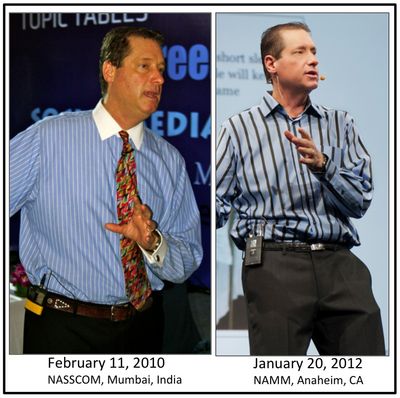 But losing 40 pounds actually took two decades because that's how long I was paying attention to the wrong measurement and failing.
When I measured just on my weight, I couldn't lose weight. No matter what I did I stayed basically the same.
However, when I measured different things such as bodyfat percentage, metabolic age, calories burned, and the foods I eat, I changed my behaviors leading directly to weight loss.
I see the same idea at work with organizations and how they measure success. I'll share those ideas in a moment, but first I want to talk about my health.
Bodyfat, burning calories, eating right, and metabolic age.
My exercise.
I use an elliptical trainer every morning. I used to measure the length of time I exercised and I did a half hour a day for a decade. It felt good but I wasn't really making progress with my weight.
Turns out that time exercising was the wrong measurement. For me calories burned is the better measure.
When I started to focus on the readout for calories burned on my elliptical, I realized that I was not working hard enough or long enough to do much good. I gradually increased my activity by measuring calories burned instead of time on the machine. For the past year, I've burned 800 calories each morning, which takes me about an hour of hard work.
 Several weeks ago, I also added a Nike+ FuelBand as another measurement of calories burned and how active I am. The Nike+ FuelBand is an awesome piece of technology that you wear on your wrist and synch to your iPhone. They are tough to get because they are so popular. I got mine on eBay by paying a premium.
My body:
The most important measurement tool for me is my scale. When I was using a standard scale that only displayed weight it was so damned frustrating because I would exercise like hell and my weight would stay the same. Or I’d eat like a rabbit for a week or a month and lose a tiny bit of weight and then gain it right back because I was hungry.
Turns out that weight was the wrong measurement. For me bodyfat percentage and metabolic age are the better measures.
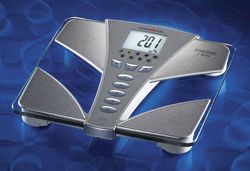 I now use a Tanita Body Composition Monitor (there are other brands available that do the same thing). It gives about a dozen readouts, but the main things I focus on are bodyfat percentage and metabolic age.
Your bodyfat is simply an indication of the percentage of your body that is made up of fat vs. everything else (mainly muscle and bone).
Metabolic Age is a calculation made by the monitor comparing your stats to averages of other people of your gender and chronological age and is used to describe overall fitness and metabolic activity.
I'm incredibly excited that my metabolic age has gradually dropped over the past year from being my actual age to now be the age of 25. In other words, I now have the body of people just out of University, people who are half my chronological age.
My food:
I used to "diet" which for me meant smaller quantities of the foods I normally ate. Instead of two slices of pizza I had one. It was awful. I was always hungry.
Turns out that quantity of food was the wrong measurement. For me the type of food is the better measure.
When I started to focus on what I ate, I realized I was eating too much of some things (such as starch) and not enough of others such as vegetables, beans, and chicken. Now I eat the right things and eat until I am stuffed full so I am not hungry. A few books that helped me with eating are The 4-Hour Body by Tim Ferriss and The End of Overeating by David Kessler.
I realize this is a really long lead in to talk about some ideas about measurement for organizations. Thank you for reading this far.
B2B companies obsession with sales leads are the wrong measure.
Consumer brands’ obsession with advertising creative and awards are the wrong measure.
The PR industry obsession with the thickness of the press clip book is the wrong measure.
Just like me focusing only on my weight, when companies focus on awards or leads or press clips, they have a difficult time achieving the ultimate goal, which is usually to profitably grow their business.
Here are some things you might consider measuring instead at your organization:
Do customers love your products and services? When you have happy customers, they talk you up. If your customers aren't happy, what can you do to increase their level of happiness?
Where are you appearing in search results for important phrases? Are you in the top of the natural search results for broad and long tail search terms? How about local search via mobile devices? How about real-time search? You can implement a content creation strategy to increase your search visibility.
How often are people talking about you on social channels? And what are they saying? You can measure levels of interaction and things like sentiment.
How many people are eager to participate in your online efforts? You can measure how many people "like" you on Facebook, subscribe to your blog, follow you on Twitter, sign up for your email newsletter, or register for a Webinar.
How many people are downloading your stuff? You can measure how many people are downloading your ebooks, presentation slides, videos, podcasts, and other content.
How are sales looking? Is the company reaching its goals?
Ultimately, the most important form of measurement within management teams is revenue and profit.
