



Doug Brockway points us to some world-class gobbledygook from a company called ITA Software by Google.
Yikes, what does this company do?
I looked at a bunch of pages on the company's site and honestly didn't understand what they do. It wasn't until I went to some external sites that I sort of figured it out.

Here is the about page. (I have pasted the headline and first two paragraphs below). Click the thumbnail to see the screenshot of the page as of November 21, 2011.
Travel Technology's Game Changer
ITA Software is a leading provider of innovative solutions for the travel industry.
Founded in the mid-nineties by MIT computer science graduates, ITA Software has pioneered a new generation of travel technology. Our world-class engineers and travel industry experts are solving the industry's most complex computing challenges, and in doing so reshaping its very foundations.
This is not a good way to talk about what you do.
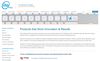
Here is the product page. Click the thumbnail to see the screenshot of the page as of November 21, 2011.
The problem with using language like game changer, innovative solutions, next generation, world-class, customer-centric, and the like is that these words and phrases are so overused as to have become meaningless.
Here is an analysis I did on gobbledygook phrases so you can avoid the most overused ones. (Incidentally, the most overused phrase in my analysis was innovation / innovative.)
Make your writing easy to understand
I've taken a stab at re-writing the about us section for ITA Software by Google by learning more about what the company actually does. My suggestion is certainly not perfect, but it is, to my mind at least, easier to understand than the one currently being used by the company.
Software for the air travel industry
ITA Software by Google helps air passengers, airlines, and online travel agencies by making it easier for people to comparison shop for flights. Because of the huge volume of real-time transactions in airline pricing, the ITA Software engine is central in the travel industry’s most complex computing application.
The company was founded in the mid-1990s by computer scientists from the MIT Artificial Intelligence Laboratory and was acquired by Google in 2011.
What do you think?


David,
Excellent post. As the Heath brothers point out in their book, Made to Stick, simplicity is the first rule for writing well.
Todd
Posted by: Todd Bartlett | November 21, 2011 at 01:27 PM
Thanks Todd.
Posted by: David Meerman Scott | November 21, 2011 at 01:54 PM
Good post, keep up your mission, David. But I still have no picture what's the company's special value (what it means for software to be central in computing application?). Although maybe it's because English is not my first language...You should make gobbledygook rewriting contests from time to time. Would be fun.
Posted by: Rgielecki | November 21, 2011 at 02:11 PM
Rgielecki - Gobbledygook re-writing contests. Great idea!
Posted by: David Meerman Scott | November 21, 2011 at 03:25 PM
David,
Your observations are completely correct. This site appears to be written by a PR person with no access to Internet.
In your proposal I didn't quite get how an engine can be "central", but probably this is only me.
It would be big fun to see the Gobbledygook Top 25 phrases for 2011.
Cheers,
Petko
Posted by: Petko Karamotchev | November 21, 2011 at 05:50 PM
I was familiar with ITA before reading your blog. When reading the About Us page it was confusing because it didn't describe what I already knew about the company. Nice work, much improved.
Posted by: Ann Marie Gagliardi | November 21, 2011 at 07:19 PM
I like to warn anyone who will listen: Gobbledygook is more dangerous than you think.
It can destroy any possibility of gaining prospects' trust in your organization.
"You get one chance to be clear with people nowadays," writes Michael Maslansky in The Language of Trust, "and if you blow it, their trust goes out the window along with their comprehension. This is because they now put the burden of understanding squarely on your shoulders."
Posted by: Bob James | November 21, 2011 at 07:29 PM
David: brilliant point, brilliantly illustrated by your re-write. For what it's worth, our research shows that B2B sales people often write in an equally abstract fashion + when they do it's a conversation killer. By contrast, when they make their messages to buyers briefer, simpler to read, and more customer-focused, buyers open their doors to continued conversations. It takes added effort to write clear messages; thanks for reminding us that it's worth the effort. - John
Posted by: John Cousineau | November 21, 2011 at 08:10 PM
This has been a fun exercise. Is my language perfect? No way. I just wanted to show the dangers of gobbledygook.
Posted by: David Meerman Scott | November 22, 2011 at 05:34 AM
The ITA post was written by and for MIT graduates .. your re-write was written for people who fly that actually do the research and buy the tickets! They are called "customers."
Posted by: Bob Zagami | November 22, 2011 at 07:29 AM
Always a great topic. I find two types of companies with this issue- 1. Companies operated by detailed, technical personalities who focus on the product more than the customer and 2. Companies with unsupervised and unseasoned copy writers who think that gobbledygook is good.
The best descriptions come from people with interaction with the customer who can speak in their terms. I find it also helps to test market these descriptions with the target market before publishing, to protect myself from myself.
Posted by: Mike Garland | November 22, 2011 at 10:34 AM
I love your brain David Meerman Scott. Thank you for attempting to restore sanity to the world. When I read press releases that sound like the web copy you analyzed here and I ask the silly question "what does that mean" I sometimes get funny looks from others. Oh well
Posted by: Mary Mancera | November 22, 2011 at 10:37 AM
Mike - I think you are right about the root causes.
Bob & Mary - it seems so simple - just write for your customers. But few companies do it,
Posted by: David Meerman Scott | November 22, 2011 at 10:45 AM
David,
This makes me think of Vincent Flanders' book and companion website http://www.webpagesthatsuck.com/ that began in the 90s. Looking at examples of bad design to demonstrate how to do it right. I think there's a whole community that can be built around this for copywriting for business.
Posted by: Jay Gilmore | November 22, 2011 at 11:05 AM
Certainly better.
Say, "help" wasn't among the gobbledygook words you found, was it? I'm not sure, but I try to avoid using the verb "help" in my writing. It's good for focusing on your readers' needs, but somehow I think people don't really want help.
Posted by: John White | November 22, 2011 at 01:22 PM
David -- thanks for taking the proactive & positive approach to helping this company out. It's easy to ridicule. To criticize. To embarrass. But it’s classy to try to help others with no anticipation of benefit. Because of your beneficence - you were blog-jacked, news-jacked, cartooned ... and might have saved the world's economy.
http://expertaccess.cincom.com/2011/11/on-writing-simply/
Posted by: SteveKayser | November 22, 2011 at 02:46 PM
Jay - some classic sucky sites there. Thanks.
John - I never intended my cut to be perfect. You're probably right about "help"
Steve - Awesome! Love the cartoons. Thanks so much, my friend.
Posted by: David Meerman Scott | November 22, 2011 at 03:00 PM
Thanks David for not only helping the ITA Software folks explain what they do, but for also helping several of us who follow your blogs in real time.
Posted by: Ron Carter | November 22, 2011 at 10:57 PM
David -
Once again, you certainly touched a nerve on the Gobbledygook front. I find myself in a strange place on the subject in that the top word in Gobbledygook Grader is "Innovation" and I'm in the middle of helping a client with that right now. Sometimes there's real work behind a word but the Copywriting Cognoscenti have so over used it that an otherwise worthy idea loses favor...
BUT, in honor of today, Turkey Day, thanks for the [Gobbledygook] Manifesto.
Posted by: Doug Brockway | November 24, 2011 at 09:40 AM
Excellent post David. So often companies use internal jargon and gobbleygook to fill pages when it would be better to leave it out or even better to hand it over to an objective third party for editing. I wonder too if the company is monitoring conversations around their brand since we do not see any responses to your post here or improvements to their site.
Posted by: TeresaSimons | November 25, 2011 at 06:13 AM
Ron - my pleasure.
Doug - Once you set your radar to "innovation" you see that stupid word everywhere. It is simply too overused to convey any meaning. If every technology company is innovative, what good is it to say so?
Teresa - I have noticed that the company has not jumped in. But I had expected that because they are clearly inward focused.
Posted by: David Meerman Scott | November 25, 2011 at 07:54 AM
I've said this is employers and clients alike...no one understands your nonsense yet it has lost me more than one project because they think their language is wonderful but who cares if you can't figure out what the heck they do!?
Good grief!
Posted by: Joy Marion | January 23, 2012 at 08:30 PM
Nice article, David!
The idea of simplicity can be applied to writing on the web in general. Being simple in words is quite a good way to make the readers understand what they are reading.
Posted by: Ronald | April 11, 2012 at 08:03 AM