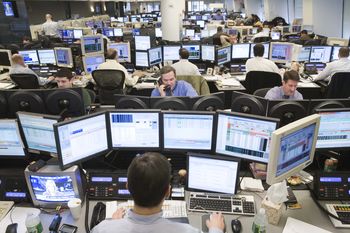

Way back in 2007, I offered a radical idea for CMOs: Hire a journalist. This idea, which I talk about in most of my live presentations was a response to many executives who wanted to know how to implement the ideas in my book The New Rules of Marketing and PR.
"How do I create great content?" CMOs asked. "Hire a journalist!" I answered, calling the idea Brand Journalism.
Many companies have done just that. Bob Evans moved from InformationWeek to a Brand Journalism gig at SAP. Ben Edwards, now VP Digital Strategy and Development at IBM was Tokyo bureau chief at the Economist. It's not just print journalists: Kathy Saenz, a former broadcast journalist at a FOX affiliate now creates videos and other marketing content at INgage Networks.
Now, as I talk about the ideas in my book Real-Time Marketing & PR, I face a similar question from CMOs: "How do I get started with real-time marketing?" CMOs like the idea of real-time engagement, reacting instantly to what's happening in the market, following up on opportunities in seconds, and inserting their company into stories being reported by mainstream media.
CMOs are confused about what to do because they recognize that the people who work for them are skilled at long-term campaign creation but lack skills of instant engagement.
Hire a bond trader in your marketing department
My radical idea is that marketing departments need someone who lives and breathes real-time. What better person than a bond trader?
My first job was on a bond trading desk in the 1980s and I lived this intense second-by-second life for a few years. I still apply what I learned on Wall Street two decades ago every day as a marketing strategist. You can hire those skills too.
(Yes, the trader you hire could also be another type of financial markets trader such as foreign exchange, stock, or commodity trader).
Here are some of the qualifications for bond trading: Strong analytical and quantitative skills; assertive and entrepreneurial nature; ability to learn, think, and react quickly; keen attention to detail; strong familiarity with business computer applications; high stamina levels and a hunger for learning; confident, poised, energetic, and willing to make personal sacrifices.
These are not typically the skills hired for in marketing departments! For example, I never see "strong analytical and quantitative skills" or "ability to learn, think, and react quickly" in marketing job descriptions.
So what would someone with a bond trading background do at a company that's not in the financial business?
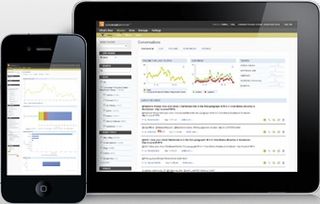
Your bond trader will be in charge of your real-time analytics.
The trader would monitor what's being said about your organization in real-time using social web analytics and what's happening on your web site in real-time using web analytics.
As I travel the world speaking with CMOs, many tell me that they have already invested in social web analytics packages from companies like Converseon, Dow Jones, and Radian6 and website analytics from players like Google and WebTrends. But many of those same CMOs put exactly the wrong people in charge of the applications. They tend to assign junior marketers (who are skilled in long term campaign management) to the task. These people just don't have the instant analytical brainpower that a trader does.
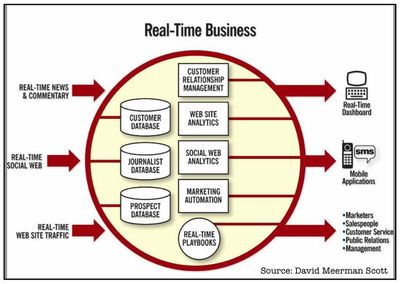
Your trader will prioritize things for response and assign to the right people.
As buyers interact with your website, a trader would be responsible for gathering sales leads and assigning them with priority metrics (such as "hot lead") and generating instant responses while alerting the appropriate salesperson. Data shows that sales leads that are responded to within one hour generate 7x the conversions of slower responses. The first blog comment on a post is more likely to be cited. Hell, the first to ask a question to President Obama gets it answered. Speed matters.
Your trader will manage your Facebook Wall and your Google Plus stream.
Usually, the trader would respond as appropriate, but when issues need to be surfaced to others in the organization, he would do that too. Sadly, most Facebook pages and the emerging Google+ pages are not responded to quickly enough. People who take the time to interact want instant feedback.
Your trader will prepare detailed analytical reports for the executive committee and board.
Many CMOs provide data to the management team and board, but typically those reports include monthly press clip books, long term campaign metrics, and focus group data. Rarely do the reports include detailed discussions on what’s happening on a second-by-second basis.
I know that hiring a bond trader is a radical idea. I get that. There are so many other places that you could use the help. Four years ago, when I talked about hiring a journalist into a marketing department that was also radical. But today, hundreds of companies are making that hire.
This is likely the first time you're hearing about hiring a bond trader into your marketing department. I hope that you give it some consideration.
I'd love to know of any former bond traders working in marketing departments. The closest I've found in implementing these ideas (although he was not a trader) is Dan Zarrella who is social media scientist at HubSpot. He has a Webinar The Science of Social Media on August 23, 2011 and it looks fascinating.
From where I sit, hiring a trader seems obvious. Does it to you?
What do you think?
Trading floor photo courtesy of Jeffries & Company
Social web analytics image via Converseon
Real-time business diagram via my book Real-Time Marketing & PR: How to Instantly Engage Your Market, Connect with Customers, and Create Products that Grow Your Business Now, a Wall-Street Journal bestseller


David, I love this idea. I think a person with a bond trader's skills and real-time ability to adapt would also excel in another important, real-time skill: crisis management and disaster recovery.
A bond trader who's been dealing with the roller coaster ride of today's economy is well-versed in understanding how to act quickly and make lighting-fast decisions when he/she has little information (and the risk is high).
I also bet (to use a pun) a bond trader would be great at building a network of key relationships with journalists (before a future disaster hits). Why? Traders understand the importance of developing trusted relationships to gain an edge in receiving/disseminating important information.
Posted by: Tony Faustino | August 10, 2011 at 01:49 PM
Tony - thanks for jumping in. I hadn't thought about the crisis communications and relationship building aspects.
Posted by: David Meerman Scott | August 10, 2011 at 02:18 PM
How about the pay-for-performance aspect? As a former trader would you have been satisfied with the same pay every week and a year-end bonus that included givebacks from customers that did not stick (but your ideas and activities brought them in)?
Posted by: John Strauss | August 10, 2011 at 02:53 PM
Hey David,
Great food for thought. I've never been a trader, but here are a few of my initial ideas:
Marketers, on average, do need to build their analytical skills. (And that is true for all functional areas.) Analytical and real-time skills have to permeate the organization through a journey that includes an assessment of the full set of skills required, supported by thoughtful design of the complete team, and a training program that extends beyond "how to use Tweetdeck".
Also, real-time marketing in a large brand requires some amount of process and systems integration, which traders typically do not have the skills to manage. Traders show up for work, and the technology is all selected and configured for them. So, the CMO also needs someone who can craft and deliver a compelling technology road map for the organization, across business units.
In managing a crisis, there are very few, very senior people who are empowered to make decisions without getting approvals. Bond traders are empowered to make decisions and act on them. They don't have to mobilize a corporate decision-making process to react, and they are likely to be very frustrated by corporate decision processes, even during crises. So the CMO will need to manage through those challenges.
In general, brands react slowly to conversations for two reasons: (1) They are understaffed, or (2) their internal processes move too slowly. Where brands are understaffing their social media accounts, hiring a trader could help, if they are given the time required.
While I agree that most large brands are not measuring and reporting social properly, I don't agree that the CEO of a global corporation should be sent a real-time conversation review, for two reasons: (1) It's too far in the weeds. That would be like sending the CEO a review of every debit and credit that flows into the accounting system, instead of an Income Statement. The CMO might also report the current readiness of real-time capabilities, and some health metrics for those capabilities, but that is different than measuring the conversations which those capabilities support. (2) Such a real-time report would need to show how the real-time conversation is impacting business value, which is what the C-level manages.
Finally, traders are motivated by money. It's in their DNA. The CMO would need to craft a compensation plan that likely includes new kinds of incentives around leads or conversions, since that is how the trader's mind works.
In any case, the bond trader would take a big pay cut to work in marketing.
These are things that brands often forget when they set out to monitor the online conversation. Too many brands write an RFP for a monitoring tool, buy some seat licenses, then they are disappointed when they don't get a lot of business value from the thousands of dollars per month that they are spending on the tool. But, as with all enterprise capabilities, the tool is just one piece. As the old mantra goes: People, Process, Technology.
Posted by: Chris Boudreaux | August 10, 2011 at 03:14 PM
David,
Long time reader, first time commenter. I love your stuff but, as a Communication student who's on the verge of graduation, I'm having a hard time getting past the assertion that my degree is going to be insufficient to do what companies need in their marketing efforts. First it was journalists can do a better job at content creation and now bond traders are better at leveraging and managing social media.
Perhaps I'm missing a point here, but what happens to the PR and marketing people in this paradigm you're proposing? What's our role now?
Posted by: Dtippetts | August 10, 2011 at 03:18 PM
I seriously have been a trader for a billion years. David is right. Ping me if you want more in depth analysis. There may be a lot we can do together.
Posted by: Pointsnfigures | August 10, 2011 at 03:20 PM
John - I doubt many companies can compete with the compensation package of successful traders. However, many traders "burn out" after a decade or so and there are only so many management positions at financial institutions. So I'd advocate putting those skills to use at marketing departments of companies.
Chris -- thanks for all these great observations. I wasn't implying that each conversation be sent to the CMO. Rather, like a weekly portfolio review, I'd want a regular review of real-time activity to take place. This does not happen at most companies.
Dtippetts - Thanks for reading. Hopefully you have been creating content while in school (a blog, YouTube channel, etc.) so that you understand content creation by having done so. That being said, there are many, many other marketing and PR roles out there. In a marketing department of 100, I'd have one trader and 10 journalists. I'd still want designers, HTML experts, marketing strategists, events people, media relations, and so on. I am not advocating firing everyone and only staffing with journalists and traders.
Pointsnfigures - awesome. We should connect.
Posted by: David Meerman Scott | August 10, 2011 at 03:38 PM
David, great article, and I don't think it's as radical as it may seem! Of course, that's coming from an industry veteran :). When I think about what attracted me from the world of real-time markets to real-time communications, it was the following:
-the rate of information flow and the rate of change in real-time
-the excitement of the constant uncertainty (and the subsequent need for guidance)
-the required people (emotional) intelligence (people are extremely emotional about their money so many of us in the industry became pseudo-psychologists!)
-the analytical skills required to pull the trigger and make quick and firm decisions
There are so many parallels as you mention and it's great to see it being written about! At the end of the day, regardless of all of the information and data available, people and businesses still need knowledge, guidance and support. There is a lot of opportunity in real-time communications for those financial professionals who are aware of the similarities. There is also an interesting space opening up for financial advisors, money managers, and traders who can leverage real-time communications to grow new streams of revenue. The old advisory model is broken, and dying...
Stephanie
Posted by: StephSammons | August 10, 2011 at 04:03 PM
David,
I absolutely have been creating content. Here's the link to my site if/when you've got a few moments (I'd love to get some feedback on it):
www.dtippetts.com/blog/
I'm also agency manager at our student-run ad/PR agency here at BYU-Idaho. The thing for me is that the industry changes literally lightning-fast so it's hard to stay on top of everything especially when those who are in a position to teach are still touting around the Old Rules.
Posted by: Dtippetts | August 10, 2011 at 04:22 PM
Steph -- good to have you saying the same things I've been. How exciting. We're lucky to be in such a vibrant environment.
Posted by: David Meerman Scott | August 10, 2011 at 04:30 PM
Dtippetts - excellent blog. And good experience you're building. Any company should be eager to hire you upon graduation! You need to teach yourself this stuff. The university degree is important, but most marketing & PR professors are teaching the old rules.
Posted by: David Meerman Scott | August 10, 2011 at 04:33 PM
David,
Thanks for the response! Talk about a confidence boost. Btw, I just ordered "Real-Time" on Amazon and looking forward to getting into it. Cheers.
Posted by: Dtippetts | August 10, 2011 at 04:54 PM
This sounds to me as the next logical step. And even it is not a Bond Trader than somebody with these skills.
Posted by: Dragan Mestrovic | August 10, 2011 at 04:56 PM
David, I love the thinking here.
Interestingly, this is happening in media, with digital trading desks now in most of the large agencies. However, these people are often looking at algorithmic real-time media buying models (and tweaking), and they do have some people with trading desk backgrounds.
I really like taking this idea beyond today's media trading desk, and looking at the broader real time marketing opportunities. There are certainly cultural and financial challenges, but there were similar challenges when you first said companies should hire journalists for marketing.
Great stuff, I love it.
-- @wittlake
(Side note: I started in financial markets, (Investment banking, not trading) and for a number of years I pushed to hire more people with backgrounds in financial markets. They brought business understanding, analytical prowess, and were more driven then our average marketing candidates).
Posted by: Eric Wittlake | August 10, 2011 at 05:25 PM
Eric - interesting on the media trading desks. That's a new one for me!
Posted by: David Meerman Scott | August 10, 2011 at 05:55 PM
I really liked the back 'n forth between David and Dallin. It highlights a point that David makes early on in the book ("Social media are tools. Real time is a mindset.") In my opinion, the key to success in the new world is looking at these tools a bit more generically and understanding what they are really used for, not the nitty gritty of each tool. As Dallin points out, they change so fast. This was such a good thread that it prompted me to write an entire post about just this topic. You can read more here: http://www.subjectivelyspeaking.net/2011/08/10/required-skills-to-enter-the-digital-world-today/
Posted by: Alan Belniak | August 10, 2011 at 09:58 PM
From where I stand it sounds like a good idea... It just seems like the trick would be finding a bond trader willing to take on the work!
Posted by: Chase Sherman | August 10, 2011 at 11:09 PM
Alan - you're right of course. Maybe you can share this with *your* CMO!? Heading over to your blog now...
Chase - The thing about bond trading is, like professional athletes, it is a young person's game. Most people burn out by mid-30s. Adapting those skills for companies is an ideal second career because few bond traders successfully make the transition to management.
Posted by: David Meerman Scott | August 11, 2011 at 05:30 AM
David,
I completely agree with your direction. At Amdocs we hired brand journalists over the last year and have seen a dramatic change in how we communicate with the market - in terms of style, frequency and context. Not sure about going as far as bond traders - but this defintely is the next evolution of the marketing persoanlities we need!
Posted by: Dana Porter | August 11, 2011 at 05:42 AM
as a former LIFFE trader and know a real time smarketing dude this piece is music to my ears. i have a real time set up that is a mini listening center for my particular industry.
Posted by: kenny@spi madden | August 11, 2011 at 09:13 AM
How i use trading skills in my smarketing role at Spiceworks.
Igoogle is my cock pit and "trading" center:
Google alerts gadget
Twitter monitor gadget
50 top trade publications pertinent to my industry are plugged into a real time RSS feed in a gadget
Facebook, Google + and Linkedin tabs
advertising and marketing industry alerts
Venture captial funding alerts for new start up's relevant to my industry and would make good prospects
cost of all this FREE: ( apart from my time)
The ROI for me doing this is i'll still be in business in a few years
Posted by: kenny@spi madden | August 11, 2011 at 09:26 AM
Dana -- I've been following Amdocs. You guys have done an excellent job. Congrats!
Kenny -- Awesome. Let me know how it goes!
Posted by: David Meerman Scott | August 11, 2011 at 09:26 AM
David, this is incredibly innovative and insightful...thank you for doing this post! As you and I have discussed, this is something "marketers" must get their arms around - how to treat marketing efforts and measurements thereof with an analytical eye.
I've run the idea of bond traders becoming CLO (Chief Listening Officer) with some large clients, VPs of marketing, etc. - MOST see the value and relevancy to this conversation (namely those that understood what bond traders actually do in their jobs).
Ultimately, organizations...public, private, B2C, B2B, etc., need to understand that there is an opportunity to listen, learn and ultimately put the actions of Real-Time Marketing & PR into a plan that is touched throughout the organization - not just by marketing & PR.
I admire your perspectives and will continue to be a strong advocate...thanks for starting these conversations!
Posted by: Matt Batt | August 11, 2011 at 04:43 PM
Matt -- maybe one of your clients would hire a trader. Let me know if that happens.
Posted by: David Meerman Scott | August 11, 2011 at 05:02 PM