



Have you used AOL, Lycos, Excite, MSN, or Yahoo! recently?

It seems we are entering Portal 2.0 as the major social sites have been jockeying for position this past week to win the minds of consumers much like the portals did more than a decade ago. These companies appear to be creating islands by erecting the same sorts of barriers as the portals did in the late 1990s.
At that time, the portals fought with each other and consumers were left out of the discussion. So while the analysts talked up the merits of this portal vs. that as if that’s all there was, a little search engine called Google figured out a better way to organize information on the Web.
Read my article just published in the Huffington Post
Are Google, Facebook, and Twitter Taking Social Backwards?
As I was playing around with Google+ this weekend, I noticed much discussion about Google+ vs. Facebook. People were talking about which is better and which they would use more. That's exactly the talk that played out in 1998 regarding portals.
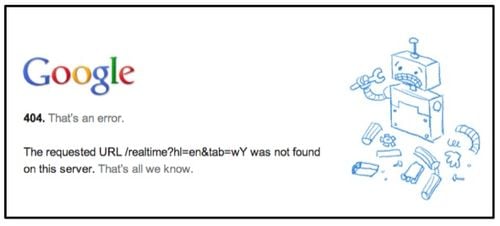
This weekend the social services responded with a round of blocking access to their services from each other. Google discontinued its excellent real-time search feature - powered mainly by Twitter - that had been active since December 2009.
And Facebook blocked a contact-exporting tool used to let people save the email addresses and other information of their Facebook friends as a file or to import them into Gmail.
Ugh. Not again! It's Portal 2.0
I worked in the portal world in the late 1990s. I was with NewsEdge, a real-time news provider that sold information feeds to the portals. It was an exciting time. But as the portals fought with each other by spending their investors money, information users were increasingly bewildered by choice. Where to find quality content? Enter the Google search engine.
Sure, I understand that Google, Facebook, and Twitter need to make money. Their investors are counting on that. But in their scramble to erect moats around their services and as they try to keep users, are they potentially driving them to consider a more nimble way to communicate?
I'm sure there is a smart company waiting in the wings ready to swoop in with a better way to organize social contacts that doesn't rely on a Portal 2.0 mentality. I have no doubt there is a company out there solving this problem just like Google solved search a decade ago. I look forward to the day when my social services and personal contacts are not housed in separate islands dotting the ocean of the social Web.
Island image: Shutterstock / R McIntyre


Yes. What ever happened to Open Social, by the way? http://www.economist.com/node/10064086
Posted by: www.facebook.com/profile.php?id=607999382 | July 05, 2011 at 03:06 PM
David,
I was going to comment here but I already commented in another portal: Google+!
Posted by: Michael Durwin | July 05, 2011 at 03:17 PM
hi David,
You sound almost surprised! I bet you're actually not though... :)
Anyway, the solution seems pretty clear to me: paid subscription. And I really believe that we're entering the stage where sites can actually start requesting money for the wellbeing of people's data. Like, a service with a future proof business model.
Posted by: Tasmijn | July 05, 2011 at 03:45 PM
Tasmijn -- that's what they tried to do in the last portal era!
Posted by: David Meerman Scott | July 05, 2011 at 04:05 PM
WELL SAID! I am disgusted already. I have a client who drove 500 hits to a Blog Post on Scribd on July 4th, holiday of course. No Google, No Bing, No Facebook Traffic. All Tweet traffic. Just the title and a link, no hype. So Google is shooting itself in the foot. As we have seen there are FAR MORE SYNERGIES and SYMBIOSIC with these behemoths than of them care to admit. IE Apple needs Google to drive traffic on it's mobile phones. Just like LinkedIn has not dumped it's TweetIn feature which allows us to update our LinkedIn Stream when we tweet. There is no reason to use this isolationist tactic, and I have iterated why on another blogs post. Alot of this Social Media frenzy is driven by the Recession because of a corporate perception that social media is free or low cost. It may all fade soon, and people get back to reality. Facebook and Twitter may evolve or ( innovate ) into big huge market places where people sell stuff, and they go the way of MySpace within the next 24 months, who knows? Nobody has a crystal ball.
I do get the impression and have said all along that somebody will come along and take the place of Facebook or Twitter, and the heavy handed ways of dealing with these things without letting users know will eventually cause backlashes, and they could do it better.
They have no PR Skills whatsoever.
I have to run. Lonny Dunn tweets at @ProNetworkBuild
Posted by: ProNetworkBuild | July 05, 2011 at 06:05 PM
Devil's advocate here: Google+ is trying to make things easier and they've succeeded on some fronts (circles). Apple has been successful with the ease-of-use strategy, and they do it "island-style."
Posted by: Phil Dunn | July 05, 2011 at 08:37 PM
I guess this is the way it works, and it can't be avoided. They all kick through the door with a revolution, trying to change the way we communicate or even live. But as they grow mainstream, politics take over.
I wish to think that things change because the stakeholders landscape of such a company shifts through the different phases of growth.
It can't be avoided. That's strategic management. And I can't wait to meet that new company lurking for behind.
Posted by: AdrianKnoll | July 05, 2011 at 11:28 PM
Pro - Social media is here to stay. It will not fade away. The question is how things will )or will not) come together.
Phil - Sure, G+ is making things easier. But that means you need yet another social platform. Another island.
Adrian - Kind of sad to assume that this behavior cannot be avoided. But having worked in media businesses for 20 years, I'd say you are right.
Posted by: David Meerman Scott | July 06, 2011 at 05:37 AM
Hi, David --
Thanks for clarifying the "Portal" issue. There's been a lot happening around all this and it's good to have someone frame the issue as a "been there, done that" kind of thing.
And I agree -- we've been there and done that and it didn't work!
Thanks,
Jamie Turner
Posted by: 60SecondTweets | July 06, 2011 at 08:39 AM
Thanks for sharing this post... Now it makes more sense... By the way can anyone please tell me on how Google + works?
Thanks
Posted by: Nicole | July 06, 2011 at 11:53 AM
Completely agree that we're moving back into a more closed and controlled, albeit still very chaotic and noisy, version of the web. Portals...apps... what will this all look like in five years?
Posted by: Paul Chaney | July 06, 2011 at 02:46 PM
Some workarounds here:
http://www.christopherspenn.com/2011/07/how-to-beat-social-media-lock-in
Posted by: Colin Warwick | July 08, 2011 at 02:30 PM